
You put up with the discomfort and paid tens of thousands of baht hoping for a beautiful smile, so why, ever since getting braces, are you dealing with “bad breath with braces”? You can smell your own stale breath inside your mask, or you wake up feeling like your breath is even stronger than before you had braces!
Don’t panic or blame yourself just yet. This is a classic problem that 90% of people with braces run into. Today, Sky Oral Care takes a deep dive into the troublesome bacteria behind it, why braces make bad breath more likely, and shares fixes for bad breath with braces that keep it under control, so you can talk and smile with full confidence again!
The Truth: Why Does Breath Get Worse With Braces?
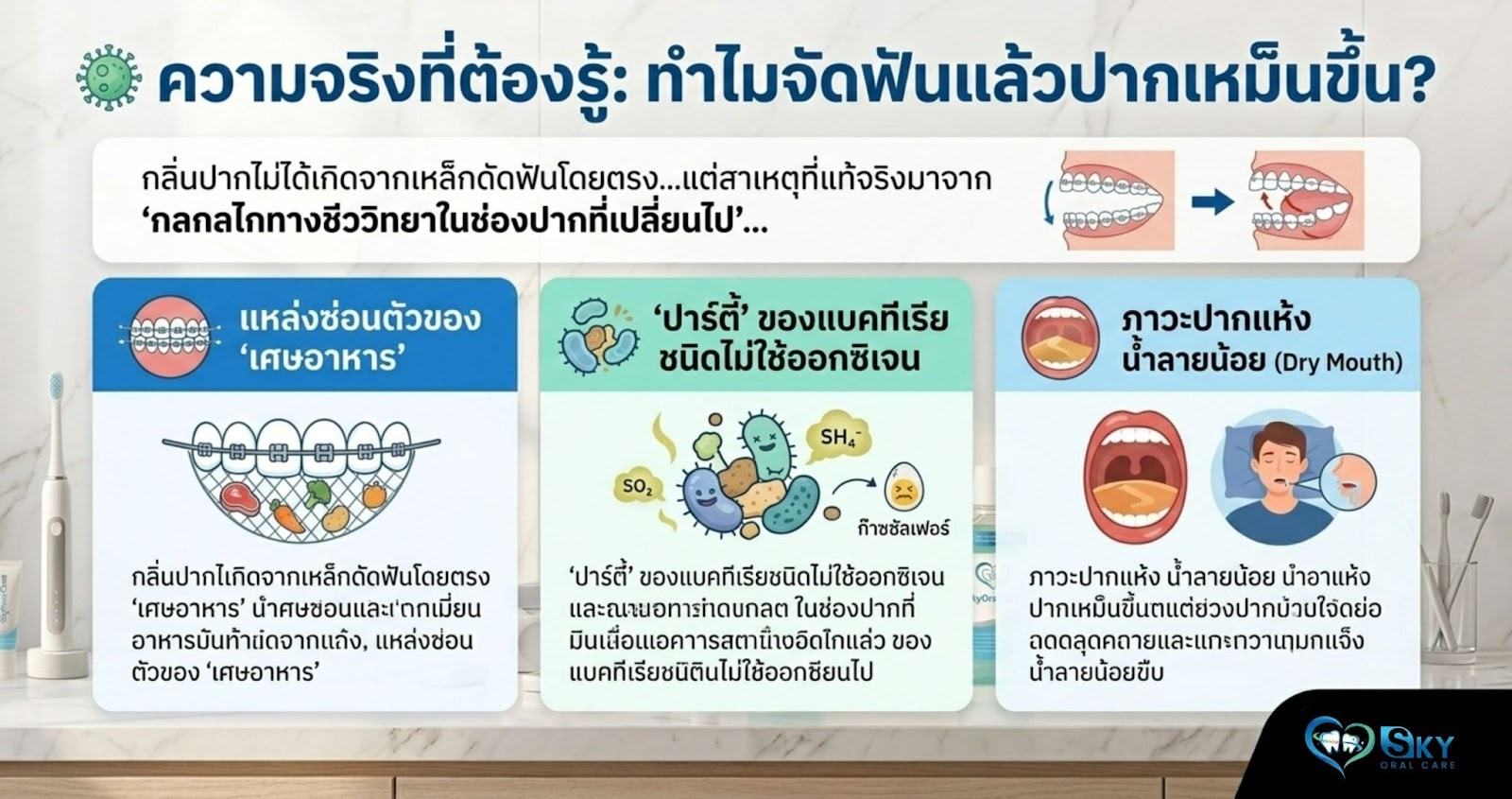
Bad breath (halitosis) isn’t caused directly by braces. The metal and wires don’t smell on their own. The real cause is the “change in the mouth’s biology” when a foreign object is in place full time, as follows:
Hiding places for “food debris”: Brackets and wires act like a perfect “fishing net,” catching bits of meat, vegetables and starches we eat. If you don’t brush thoroughly, this food debris gets left behind and goes bad in the gaps around the metal.
A party for “anaerobic bacteria”: When food debris builds up, troublesome bacteria in the mouth break it down and release “sulfur gases,” which smell like rotten eggs and are the cause of strong bad breath.
Dry mouth, low saliva: Many people with braces sleep with their mouths open or can’t close their lips fully because of the appliances, leaving the mouth dry with less saliva flowing. Saliva is the natural mechanism that washes away bacteria, so with less saliva, bacteria grow faster, causing stale, strong-smelling breath, especially when you wake up.
3 Bad-Breath Hotspots People With Braces Often Miss
To beat bad breath for good, we first need to know where the enemy hides. Check whether you’ve been missing these 3 spots:
Under the wires and around the bracket edges: A regular toothbrush definitely can’t reach here, so you’ll need extra tools (see more in the article: 5 Spots Your Toothbrush Can’t Reach and How to Use an Interdental Brush)
The gumline: People with braces are often afraid of hurting their gums, so they only brush the metal, letting plaque build up along the gumline until the gums become inflamed. Gum inflammation is a major cause of a bloody, metallic odor and bad breath.
The back of the tongue: A large area where bacteria love to settle into a white coating. Many people with braces focus so much on brushing their teeth that they forget to clean their tongue.

✨ How to Fix Bad Breath With Braces (Quick Confidence Rescue)
Once you know the causes, the fix isn’t hard. You just need a few small habit changes and the right helpers:
Golden rule, “brush after every meal”: As soon as you finish eating, rinse hard with plain water once to remove larger bits of food, then brush. If you’re out and really can’t brush, always keep a spray that helps reduce bad breath or a small bottle of mouthwash in your bag.
Use an “interdental brush” and “floss”: These are a must, no way around it. An interdental brush helps clear plaque under the wires, while floss for braces (Superfloss) helps remove food from between the teeth.
Sip water often throughout the day: This eases dry mouth and stimulates saliva, which helps wash away bacteria naturally.
Switch to the right “toothpaste”: This is the shortcut that shows results fastest! Regular toothpaste may not have enough cleaning and odor-control power for people with braces.
Say Goodbye to Stale Breath With a Toothpaste Made for Braces
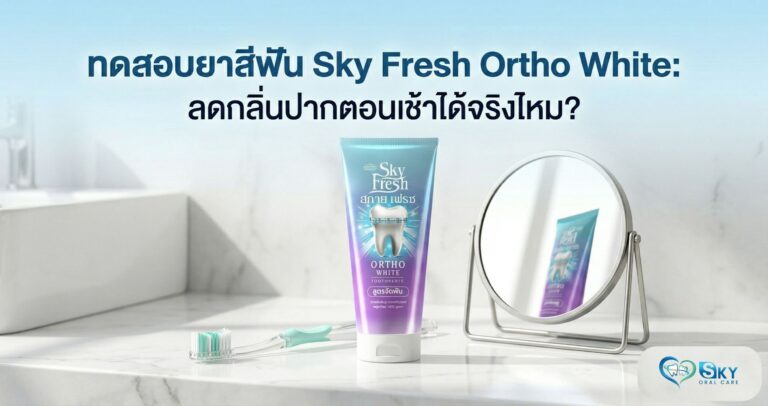
If you’re looking for the right helper, we recommend Sky Fresh Ortho Organic Microbiome Toothpaste for braces, designed to clean around braces, where buildup and odor collect easily.
Why does Sky Fresh Ortho suit people with braces who worry about bad breath?
Cleans around brackets and wires: Reaches hard-to-clean areas around braces.
Helps reduce plaque, bacteria and odor: Contains zinc lactate, CPC and O-Cymen-5-OL plus khoi and andrographis extracts, helping care for gums and reduce plaque buildup, a root cause of bad breath.
Long-lasting freshness: Menthol, peppermint, eucalyptus and tea tree help keep your breath fresh.
❓ Q&A: Common Questions About Bad Breath With Braces
Q: Can mouthwash help reduce bad breath?
A: Yes, it can, but avoid mouthwash that contains “alcohol,” because alcohol makes your mouth even drier, and once it evaporates, bad breath comes back even stronger. A gentle formula containing CPC, which helps reduce bacterial buildup, is the better choice.
Q: Can clear aligners (Invisalign) cause bad breath?
A: They can, too! Especially if you don’t clean your “aligner trays” well, bacteria will cling firmly to the plastic, causing a musty smell when you wear them. Clean them with a dedicated cleansing mousse.
Q: Can scaling help reduce bad breath?
A: It helps a lot! People with braces should see a dentist for scaling (dental cleaning) every 3-6 months, because tartar is a perfect breeding ground for bacteria that a toothbrush can’t remove.
Summary
“Bad breath with braces” is a natural issue that comes from the limitations of orthodontic appliances, but you can control it and get rid of it. Just be disciplined about cleaning, use an interdental brush every day and, most importantly, choose a toothpaste designed for people with braces, like Sky Fresh Ortho Organic Microbiome. That’s all it takes to show off a beautiful smile with fresh breath and confidence!
Bring back fresh breath and restore confidence in your smile