
One of the scariest experiences with braces is swishing mouthwash and having it hit a “mouth ulcer” where the metal has caught your cheek… a ten-out-of-ten sting that almost brings tears to your eyes! It puts many people off and makes them ask, “Isn’t brushing enough? Do I really need mouthwash?”
If you have braces and you’re on the fence, today Sky Oral Care clears it all up: why dentists still recommend mouthwash, what about rinsing with salt water, plus tips for choosing a gentle mouthwash for braces that leaves your mouth squeaky clean in one swish, without making your ulcers sting!
So, Do You Need Mouthwash with Braces?
The short answer: “Yes, very much!” Even if you already use a braces toothpaste and an interdental brush, your mouth isn’t just teeth. There are also your cheeks, the roof of your mouth and the back of your tongue, and brackets and wires create a huge number of extra nooks and hard-to-reach corners.
Benefits of mouthwash for people with braces:
Liquid Action: Mouthwash can flow into spots that toothbrush bristles can’t reach, helping wash out tiny food particles and loosened plaque thoroughly.
Reduces bacteria throughout the mouth: Helps clear bacteria clinging to soft tissues (cheeks/tongue), a main cause of sour breath.
Extra fluoride protection: Mouthwash with fluoride coats the tooth surface around the brackets and works very well to help reduce the risk of white spots when the braces come off.
Why Do Braces Cause Mouth Ulcers So Often?
The main cause is friction! Brackets, long wire ends poking out, or bands tend to catch and rub against the soft tissues in your mouth (inner cheeks and lips). Every time you talk or chew, the rubbing repeats until it becomes a scrape and eventually a “mouth ulcer (canker sore).”
Once you have an open sore in your mouth, using a regular mouthwash with a high alcohol content is like “pouring salt water on a fresh wound.”
Can You Use Salt Water or a Salt Mouthwash Instead?
Many of us have heard the classic advice from our elders: “Got a mouth sore? Rinse with salt water.” But does it work just as well for people with braces? Let’s look at each option:
1. Homemade warm salt water rinse (Warm Salt Water)
How it feels: Mildly salty, warm and comfortable, with no stinging.
Pros/limits: It’s a natural method dentists recommend right after a tooth extraction or for large mouth ulcers. Warm salt water helps reduce swelling and inflammation well, but salt water “contains no fluoride” and doesn’t help reduce stubborn bacterial buildup. So it’s better suited to short-term use to “soothe sores” than to everyday cleaning.
2. Supermarket salt mouthwashes
How it feels: Very salty, tingly, and it often leaves your tongue numb.
Watch out: Even if the label says “natural salt formula,” many brands also add “alcohol” or strong cooling agents for a fresh feeling. Imagine having a sore where the metal catches your cheek and then rinsing with something salty, icy and alcoholic… it’s guaranteed to “sting so much your eyes water”! And some formulas don’t even contain fluoride to help prevent tooth decay.
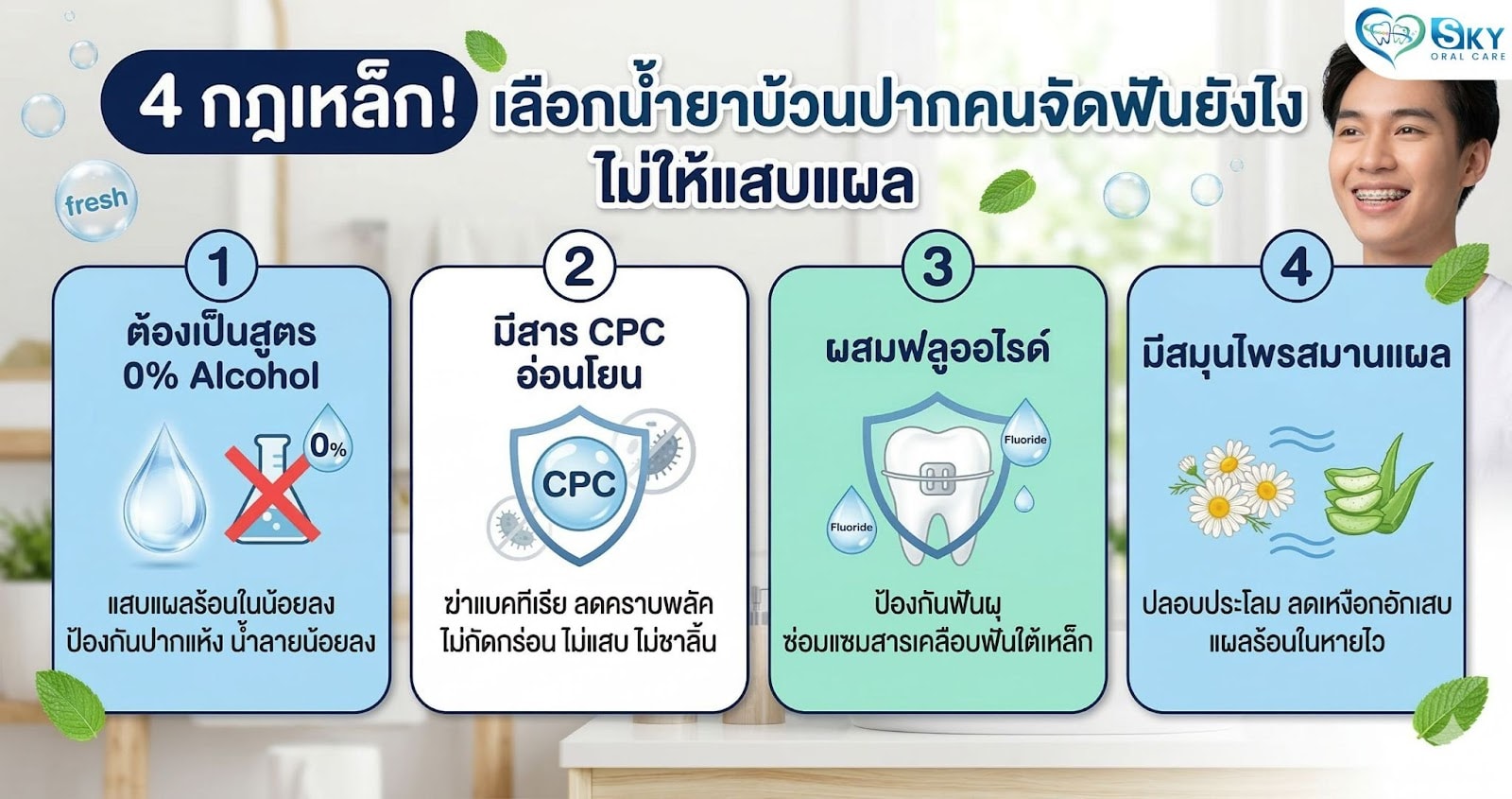
4 Golden Rules for a Sting-Free Braces Mouthwash
If you don’t want tears when you rinse, flip the bottle over and check the ingredients against this checklist before you buy:
Must be 0% Alcohol (alcohol-free): This is rule number one! Besides making ulcers sting badly, alcohol also dries out your mouth and reduces saliva, and a dry mouth is exactly what lets bacteria grow fast and makes your breath smell worse.
Contains a gentle antibacterial agent (such as CPC): Look for Cetylpyridinium Chloride (CPC). This ingredient is a hero that helps effectively reduce bacterial buildup and plaque without corroding the tissues in your mouth, and without stinging or numbing your tongue.
Contains fluoride (Fluoride): To help prevent tooth decay and repair enamel that may be damaged by bacteria hiding under the brackets.
Has herbs that help the mouth feel fresh and moist (Soothing Ingredients): Such as chamomile or aloe vera extract, which help soothe, support gum health and stay gentle on mouth ulcers.
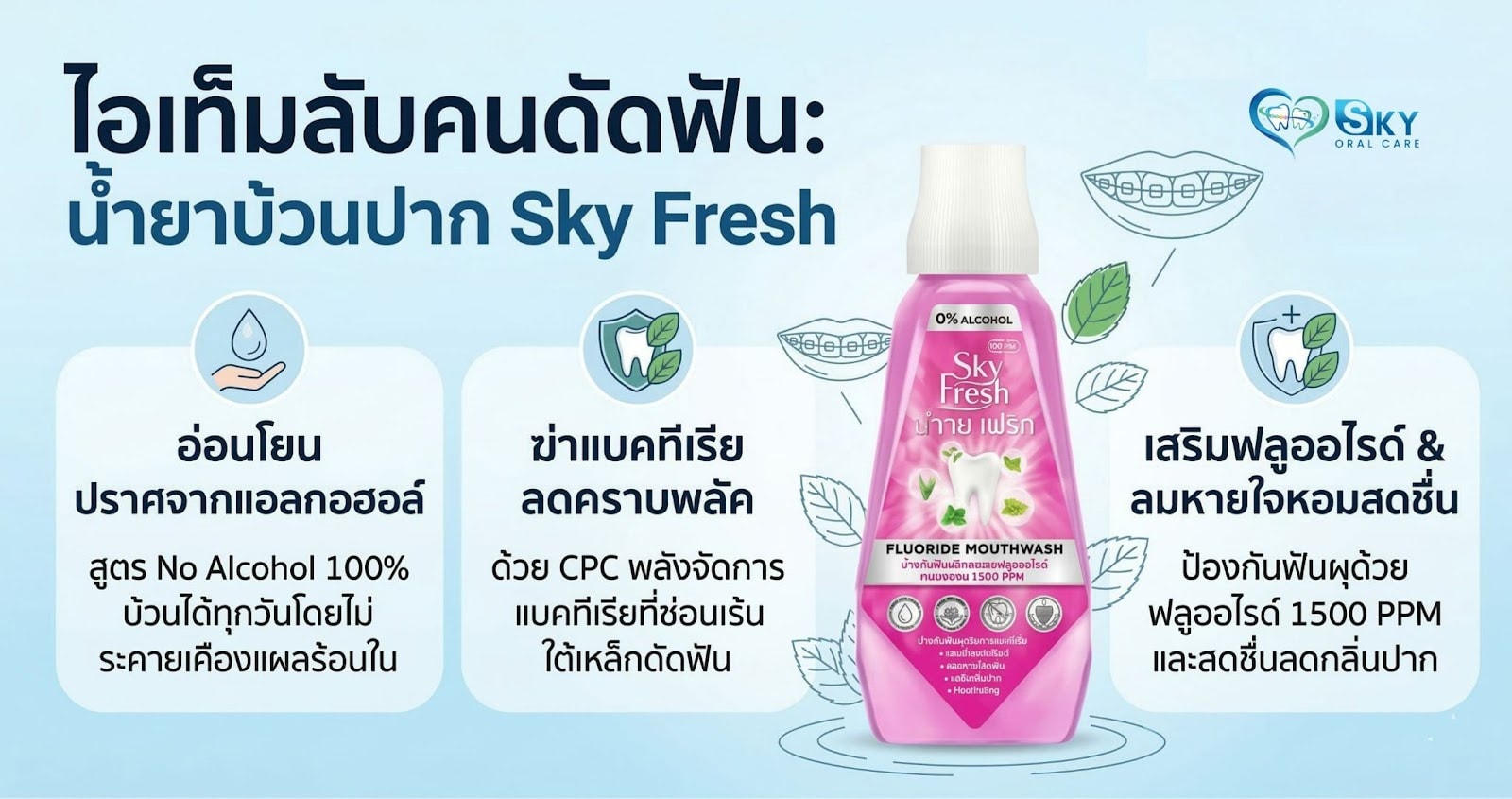
The Braces Secret Weapon: Sky Fresh Mouthwash
No need to stand there squinting at labels, because Sky Oral Care has developed [Sky Fresh Organic Microbiome Fluoride Mouthwash], an alcohol-free mouthwash that suits people with braces (and people who often get mouth sores).
No Alcohol: Gentle. No stinging on ulcers and no numb tongue after rinsing.
CPC, zinc lactate and o-Cymen-5-ol: Help reduce plaque buildup under the wires and help reduce bad breath.
1,500 ppm fluoride and xylitol: Help prevent tooth decay, with 5 fresh flavors to choose from.
Just swish after brushing, using the amount and time on the label, for cleaner gaps around your brackets and fresher breath.
❓ Q&A: Common Mouthwash Myths with Braces
Q: Can I use mouthwash instead of brushing on busy days?
A: Absolutely not! Mouthwash “adds to” your cleaning. It can’t wash away sticky plaque or bigger pieces of food stuck in your braces. Always brush and use an interdental brush first.
Q: Should I rinse with water after using mouthwash?
A: We don’t recommend rinsing with water afterward, because it washes away the active ingredients, CPC and fluoride. Let the mouthwash coat your mouth, and avoid eating or drinking for about 30 minutes after rinsing.
Q: Can kids who just got braces use it?
A: Yes, from age 6 and up (the label does not recommend it for children under 6), if they’re older children who can “control swallowing” and spit out easily. An alcohol-free mouthwash can help add protection against tooth decay.
Summary
A mouthwash for braces is a must-have that helps fill the gaps in your cleaning where a toothbrush can’t reach. Just choose wisely and go for an alcohol-free formula to protect your mouth ulcers, and you can keep your smile clean and feel confident every day while wearing braces.
No more stinging! Upgrade your clean with gentle Sky Fresh mouthwash