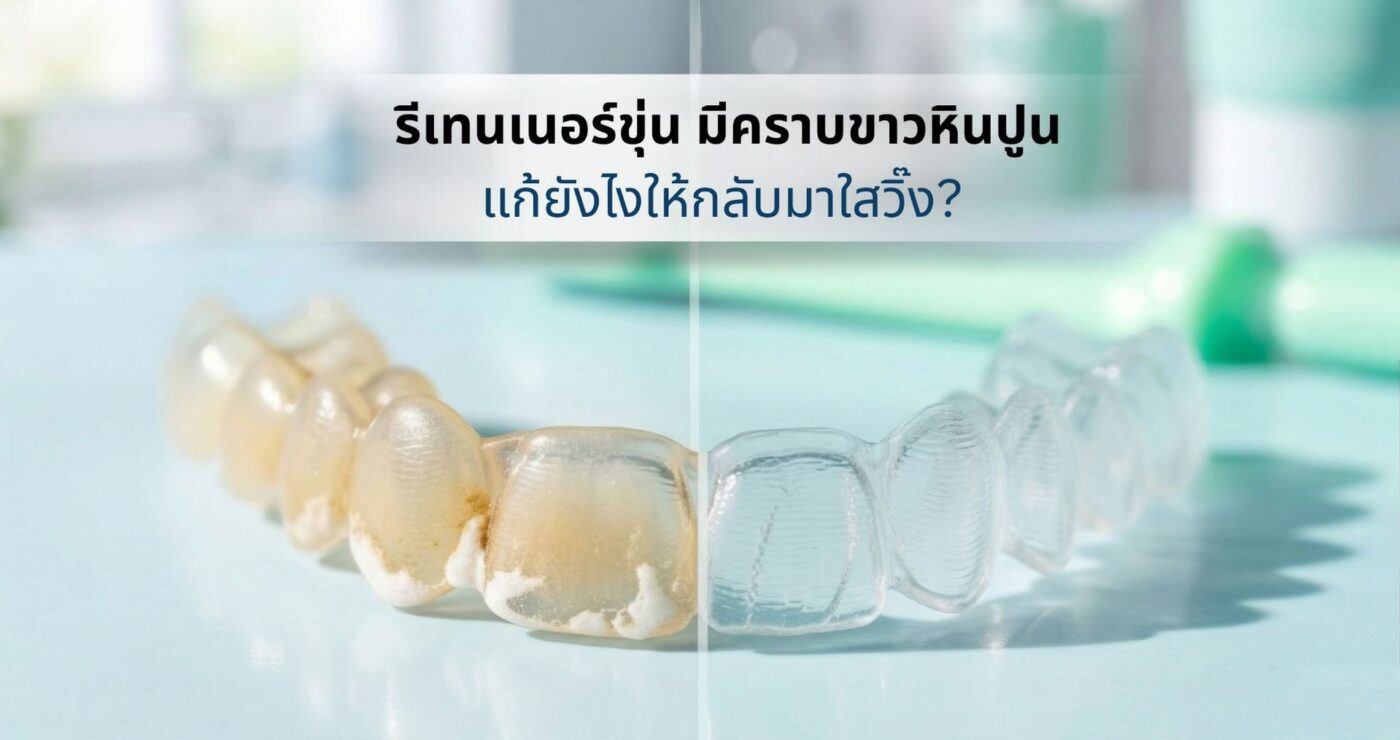
When you first get your clear retainer made from your dental impressions, the clinic hands it over sparkling clear like crystal glass, and it looks totally natural when you wear it. But after a while… why does your retainer start to turn “cloudy” and yellowish, and sometimes even get “hard white deposits” stuck along the edges that won’t come off no matter how you scrub?
Those hard deposits aren’t bits of plastic peeling off. They’re actually “tartar” that has settled onto your retainer! Today, Sky Oral Care digs into where these white deposits come from and why retainers get cloudy, and shares tips to rescue your retainer so it’s crystal clear and spotless again.
What Is the Hard White Buildup on Retainers?
The cloudy white buildup that sticks so tightly it almost blends into the plastic is known in dentistry as tartar, or dental calculus.
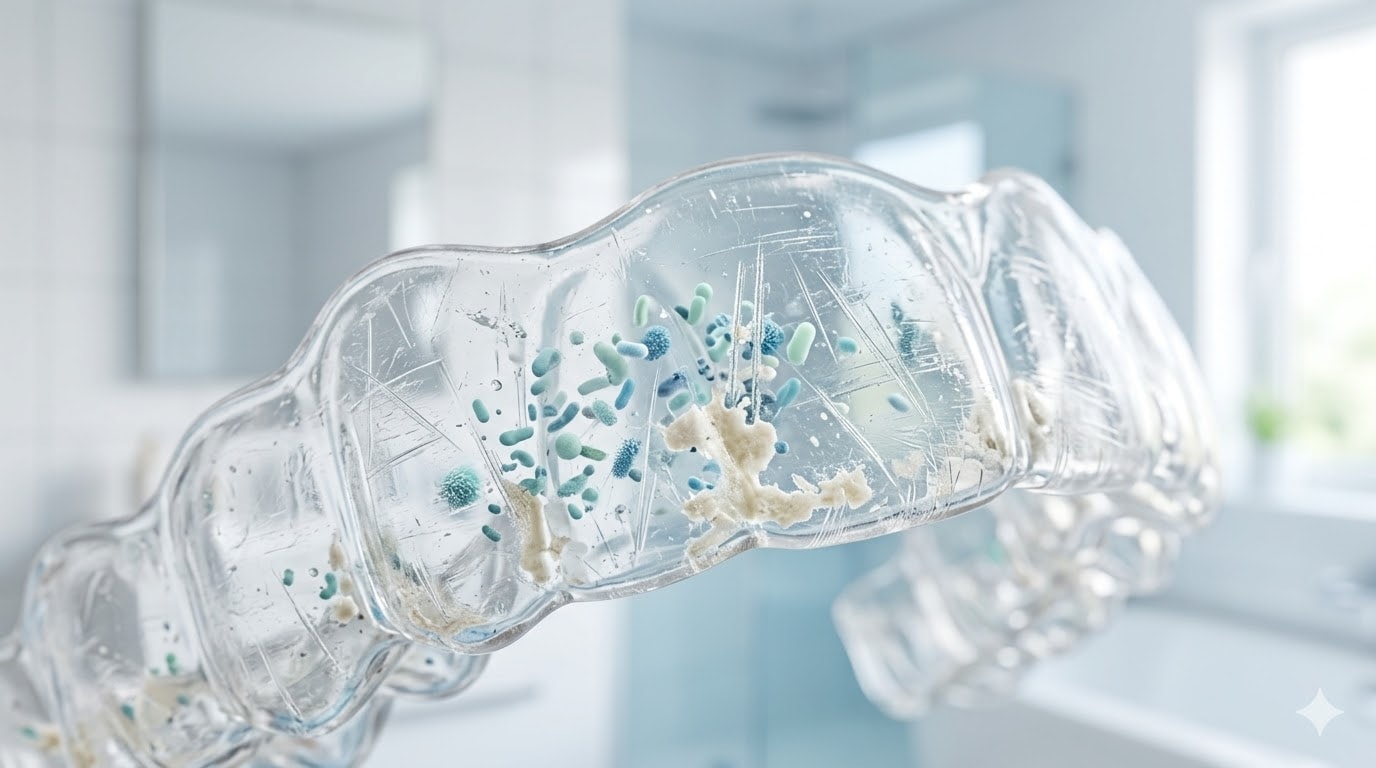
It forms the same way as the tartar between our teeth. It starts with “plaque”, bacteria mixed with food debris and saliva. If you don’t clean your retainer thoroughly, these bacteria form a sticky film over the plastic, and as it reacts with the “calcium minerals in saliva” over time, it hardens into white tartar that clings on tight.
⚠️ 3 Main Reasons Retainers Turn Cloudy Too Soon
If your retainer looks dull, check right away whether you’ve been doing any of these 3 things:
Letting saliva dry on it: Taking your retainer out and leaving it straight on the table! Letting saliva dry on the plastic is what causes cloudiness and musty odors. (Ideally, rinse it with plain water right after you take it out.)
Brushing your retainer with “toothpaste”: As we’ve warned many times, the abrasives in toothpaste scratch the plastic, leaving “hairline scratches.” These tiny scratches are perfect hiding spots where bacteria and tartar cling, making the plastic look cloudy.
Drinking tea, coffee or soda while wearing your retainer: The color from drinks can seep into the plastic and turn your retainer yellow permanently.
✨ How to Fix a Cloudy Retainer and Clear Tartar
If your retainer is starting to get annoying white deposits, here’s how to deal with them by level of severity:
Level 1: White Buildup Just Starting to Form (Not Yet Hard)
Never pick at it with anything sharp! Use a cotton swab or an “extra-soft” toothbrush dipped in plain water and gently rub the areas with white buildup. Deposits that haven’t fully mineralized and hardened will gradually come off.
Level 2: Prevent Recurrence and Remove Cloudiness (Best!)
The safest and gentlest way to care for your retainer is to use a product made specifically for cleaning retainers at least once a day.
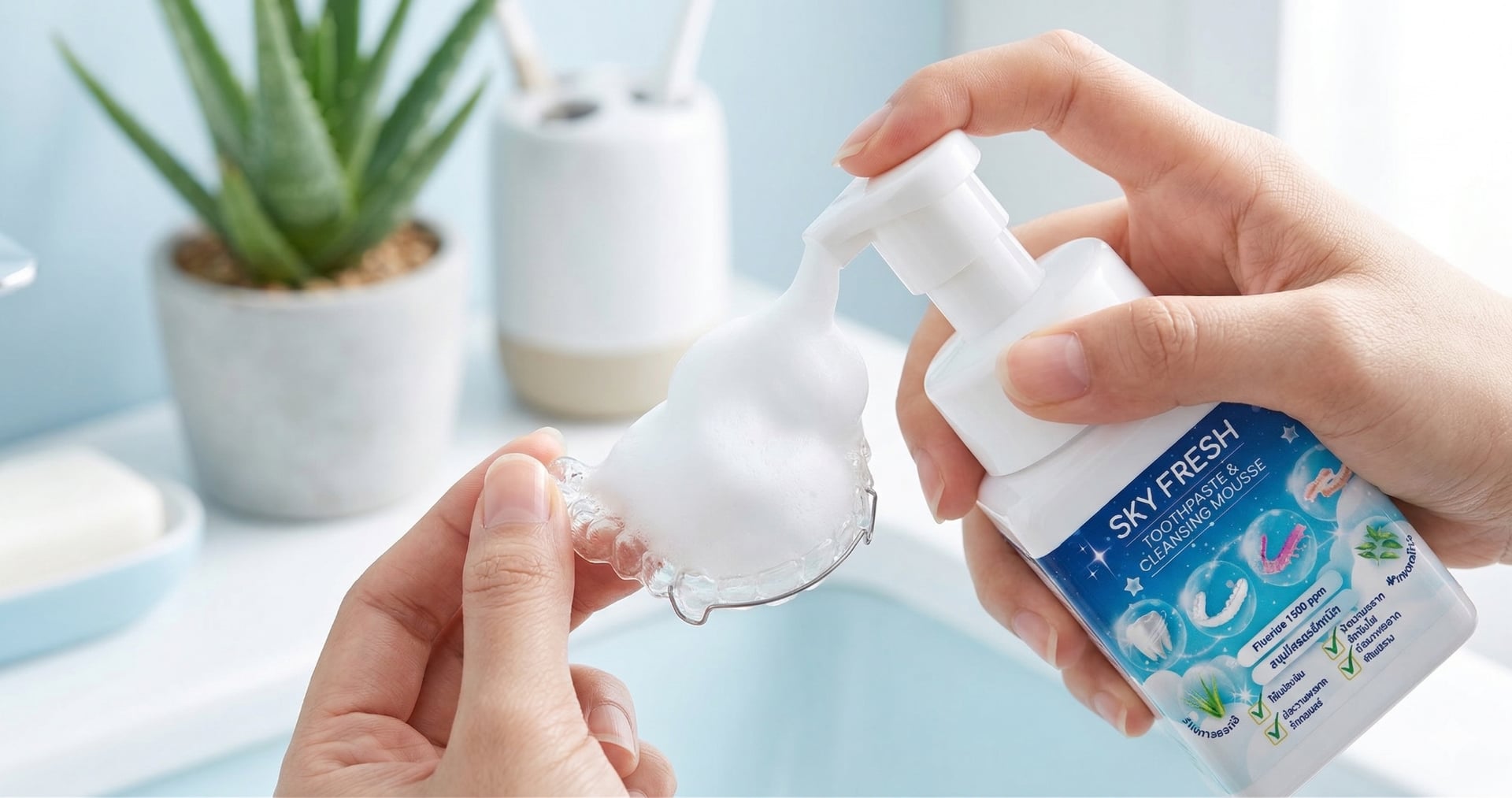
We recommend “Sky Fresh Retainer & Denture Cleansing Mousse,” a cleansing mousse foam for retainers, dentures and clear aligners.
No scrubbing needed: Just pump the mousse all over your retainer, brush gently with a soft-bristle brush, then rinse thoroughly with clean water. The mousse (Active Micro Bubble) helps buildup, saliva residue and odors come off with ease.
Lowers the chance of tartar: When plaque is removed every day, the minerals in saliva have nothing to cling to, so annoying white tartar won’t bother you and your retainer stays sparkling clear for longer.
Level 3: Large, Hard, Stubborn Tartar (Critical Stage)
If the white buildup is rock-hard, in large chunks, and stuck on so firmly that the mousse foam can’t remove it, never force it by scrubbing hard, as the plastic could crack or break. Take your retainer back to your dentist instead. Clinics have solutions and small instruments that can safely chip the tartar away.
❓ Q&A: 5 Common Questions About Cleaning Retainers
Q1: Can I use “baking soda” to scrub tartar off my retainer?
A: Not recommended! Baking soda is a fairly coarse abrasive. Scrubbing plastic with it causes micro-scratches, just like toothpaste does, which can leave your retainer permanently cloudy.
Q2: Does soaking in “vinegar” really make retainers clearer?
A: Vinegar mixed with water (diluted) can help dissolve soft tartar because it’s acidic. The downside is that vinegar’s pungent smell clings strongly to the retainer, and if the mix is too strong, the acid may degrade the plastic. A specialized cleansing mousse foam is the safer choice.
Q3: Will washing my retainer with dish soap make it clearer?
A: Dish soap is good at removing “greasy residue,” but it doesn’t remove tartar and can’t completely get rid of the bacteria that cause stale-saliva odor. Most importantly, it may leave residue that can irritate your mouth.
Q4: Is the white buildup on retainers harmful to teeth?
A: Indirectly, yes! Tartar on a retainer harbors a huge amount of bacteria. When your retainer is fitted over your teeth, these bacteria are in contact with your teeth and gums all night, raising the risk of tooth decay and gum inflammation.
Q5: How long does a clear retainer last?
A: On average, a clear retainer lasts about 1 – 2 years (depending on care), because the plastic degrades, stretches, warps or turns cloudy over time. But cleaning it properly with mousse foam every day helps it stay sparkling clear for longer.
Summary
A cloudy retainer with tartar buildup isn’t something you have to put up with in embarrassment. The first step to a clear, clean retainer is changing your habits: stop brushing it with toothpaste, stop letting saliva dry on it, and switch to a helper made specifically for caring for plastics in the mouth, like Sky Fresh Retainer & Denture Cleansing Mousse. Then you can smile wide and show off your retainer without worrying about white buildup or bad breath!
Rescue your retainer, get it crystal clear again and keep annoying tartar away! With Sky Fresh Retainer & Denture Cleansing Mousse (retainer cleansing mousse)