
Ever been there, braces folks? You stand brushing in front of the mirror for ages, sure you’ve got everything clean, but when you smile to check… whoops! There’s still a bit of leafy green stuck in your brackets. Or you try to floss, and it’s so hard to thread through that you just want to give up.
The truth is, “brackets and wires” create lots of hard-to-reach spots in your mouth, and it’s normal for regular toothbrush bristles not to get in there. The secret weapon everyone with braces “must have” and “must know how to use” is the interdental brush.
Today, Sky Oral Care takes you on a tour of your mouth, pointing out 5 hidden spots where bacteria love to settle in, and teaches you pro-level interdental brushing for squeaky-clean teeth and fresh breath!
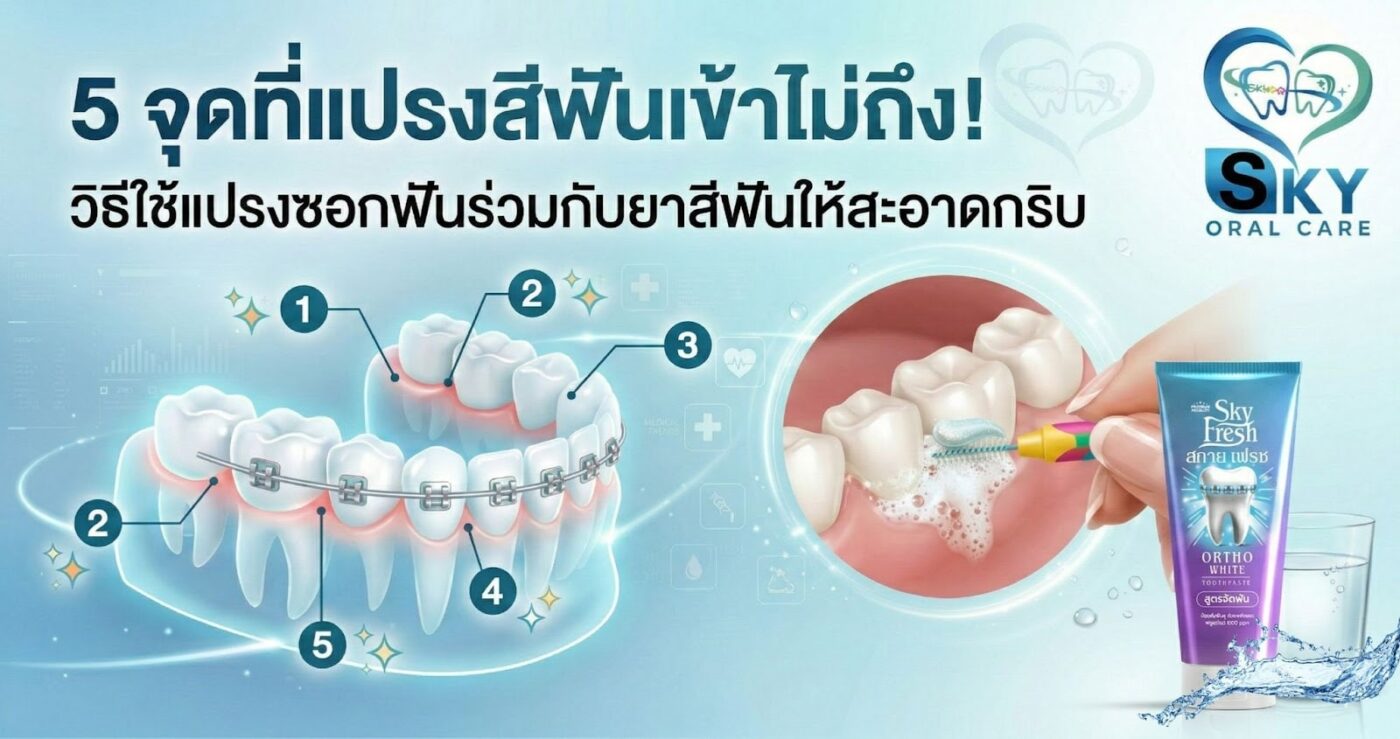
5 Blind Spots People with Braces Often Miss
Grab a small mirror and check your teeth along with us. These are the 5 red zones most at risk for tartar and cavities:
Under the archwire: The long stretch between each bracket, where bits of meat or rice vermicelli love to get tangled. Regular bristles are often blocked by the wire, so food doesn’t get swept out completely.
Around the brackets: The edge where the square bracket meets the tooth often has cloudy white plaque (a film of microbes) stuck to it. If it’s left there for a long time, you’ll see white spots when your braces come off.
Crowded teeth: Early in treatment, teeth that still overlap create perfect little nooks that a toothbrush can’t reach 100%.
Gumline: People with braces often focus on brushing the brackets and forget the gumline, which can lead to “swollen, red gums” or gingivitis.
Back molars: Where the bands or tubes sit, the deepest and darkest spot. Your toothbrush often bumps into your cheek before it gets there.
How to Use an Interdental Brush on Braces
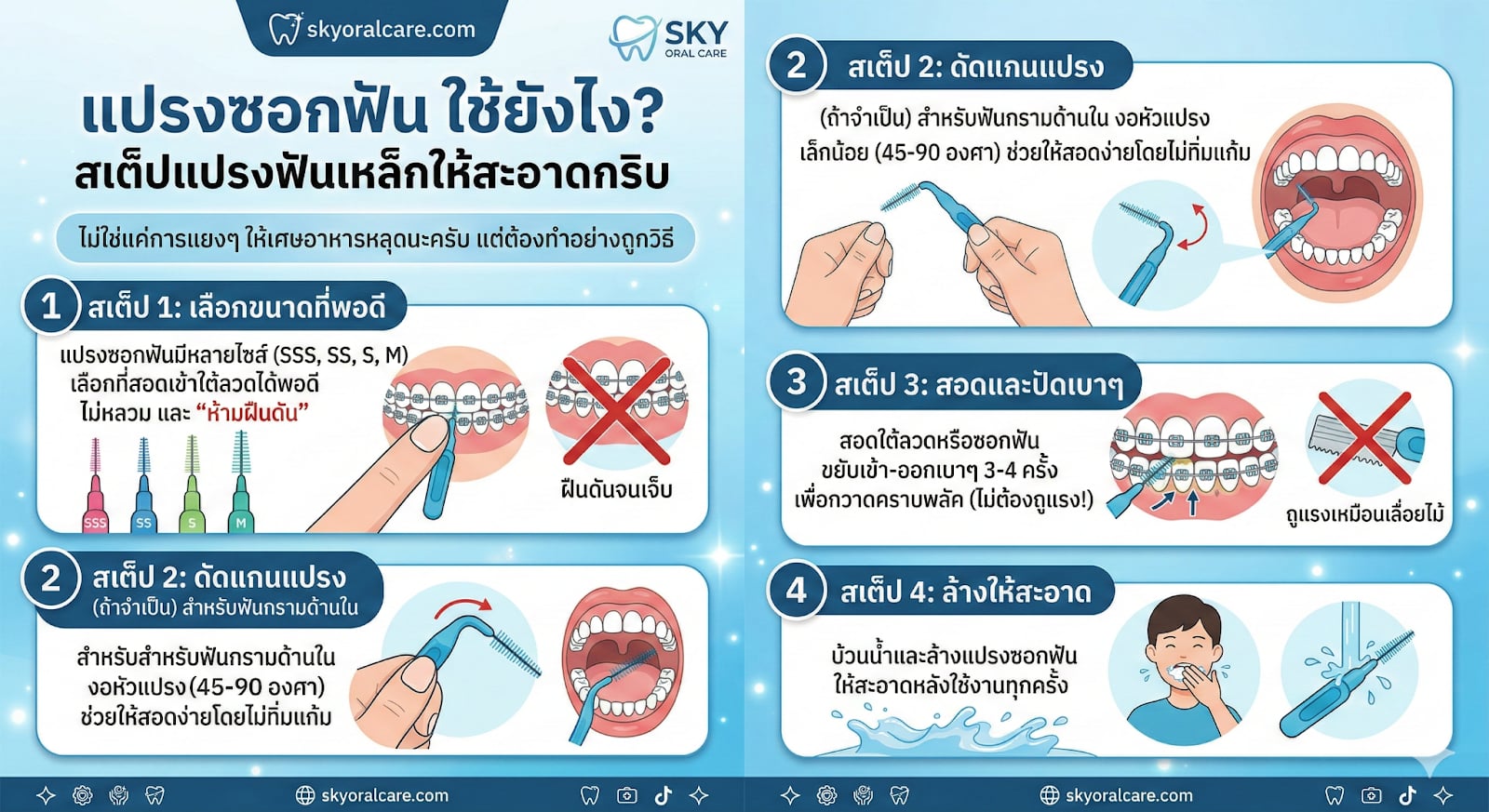
Using an interdental brush isn’t just “poking around” to knock food loose. It has to be done the right way so your gums don’t recede. Here are the steps dentists recommend:
Step 1: Choose the right size Interdental brushes come in several sizes (SSS, SS, S, M). Choose one that fits snugly under the wire, not too loose, and “never force it” if it’s so tight that it hurts.
Step 2: Bend the brush neck (if needed) For the inner molars, bend the brush head slightly (about 45-90 degrees). This makes it easier to reach between the back teeth without poking your cheek.
Step 3: Insert and sweep gently Slide the brush under the wire or between your teeth and move it gently in and out 3-4 times to sweep away plaque (no need to scrub hard like you’re sawing wood!).
Step 4: Rinse well Rinse your mouth and clean the interdental brush thoroughly after every use.
✨ Advanced Tip: Pair It with Toothpaste
Did you know you can take your clean up another level by “dabbing a little toothpaste on your interdental brush” before sliding it between your brackets?
This delivers fluoride and bacteria-reducing agents directly onto the tooth surfaces a toothbrush can’t reach, helping prevent white spots and reduce stale-saliva odor.
Recommended item: [Sky Fresh Ortho Organic Microbiome Toothpaste for braces]
A toothpaste for people with braces with a smooth, fine foam. When you dab it on an interdental brush, the toothpaste dissolves and works its way deep under the wire to clean, with a cool, fresh herbal feel that helps knock out bad breath from trapped food.
❓ Q&A: Common Interdental Brush Problems
Q: My gums bleed when I use an interdental brush. What should I do?
A: If you’ve just started and there’s a little bleeding, that’s normal. It happens because the gums in that area were already inflamed (from plaque buildup). Keep using it gently. Once the buildup is gone, your gums will get stronger and the bleeding will stop on its own. (But if there’s a lot of bleeding and it really hurts, you may have chosen a brush size that’s too big.)
Q: How long does one interdental brush last?
A: Usually you should replace it every 1-2 weeks, or when you see “the bristles starting to splay” or “the wire core starting to bend out of shape.” If you keep using it anyway, the wire core may scratch your enamel or injure your gums.
Q: If I use an interdental brush, do I still need to floss?
A: We recommend using both! Interdental brushes are great at cleaning “under the wire and around the brackets,” while orthodontic floss (Superfloss) is great at cleaning “the contact point between 2 teeth,” which interdental brushes can’t reach.
Summary
A braces wearer’s toolkit isn’t just a toothbrush. Adding an “interdental brush” to your daily routine and using a specially formulated toothpaste for braces the right way will help close all 5 blind spots, bring back fresh breath, and let you smile on the day your braces come off with clean, white teeth and no annoying white spots!
Keep between your teeth squeaky clean with the toothpaste made for braces