

For new moms, even a single sneeze from your baby is enough to make you worry. So when your baby opens their mouth to cry or yawn and you notice a thick “white coating on their tongue,” all kinds of worries come up: Does it hurt? Is it dangerous?
Many of us have heard older relatives say, “Babies who drink milk always have white tongues. Leave it and it’ll go away on its own.” This belief is “wrong and very dangerous”, because a mouth that isn’t cleaned is where unexpected health problems for your little one begin!
Today, Sky Oral Care introduces moms to this pesky white coating and shows you the correct, safe way to clean a baby’s tongue, so your little one has a clean, healthy mouth from the very first steps of life.
Milk Residue or Thrush? Tell Them Apart First
A white coating on a baby’s tongue has 2 main causes, and each has different signs and a different way to handle it:
Milk residue: Most common in babies aged 0-6 months, especially formula-fed babies or breastfed babies who often fall asleep at the breast. Milk residue forms a thin white film on the tongue.
How to test: When you gently wipe with a damp cloth, this white coating comes off easily, and the tongue underneath is still a healthy pink.
Oral thrush: This happens when milk residue builds up for too long and fungus (Candida) starts to grow. The white coating gets thicker, looks like cottage cheese, and sticks firmly to the tongue, inner cheeks and roof of the mouth.
How to test: If the coating won’t wipe off, or after wiping you find the tissue underneath is bright red and slightly bleeding, and your baby is fussy and refuses to feed because their mouth hurts, that’s thrush. See a doctor right away!
Is It OK to Leave a White Tongue Alone?
The answer is “Never leave it!” Not cleaning your baby’s mouth from birth has several downsides:
It risks developing into “oral thrush,” which can hurt so much that your baby can’t feed, affecting their weight and development.
It gives the mouth a sour, stale smell.
When the first baby tooth starts to come in, the bacteria that have built up will attack it and can cause cavities quickly.
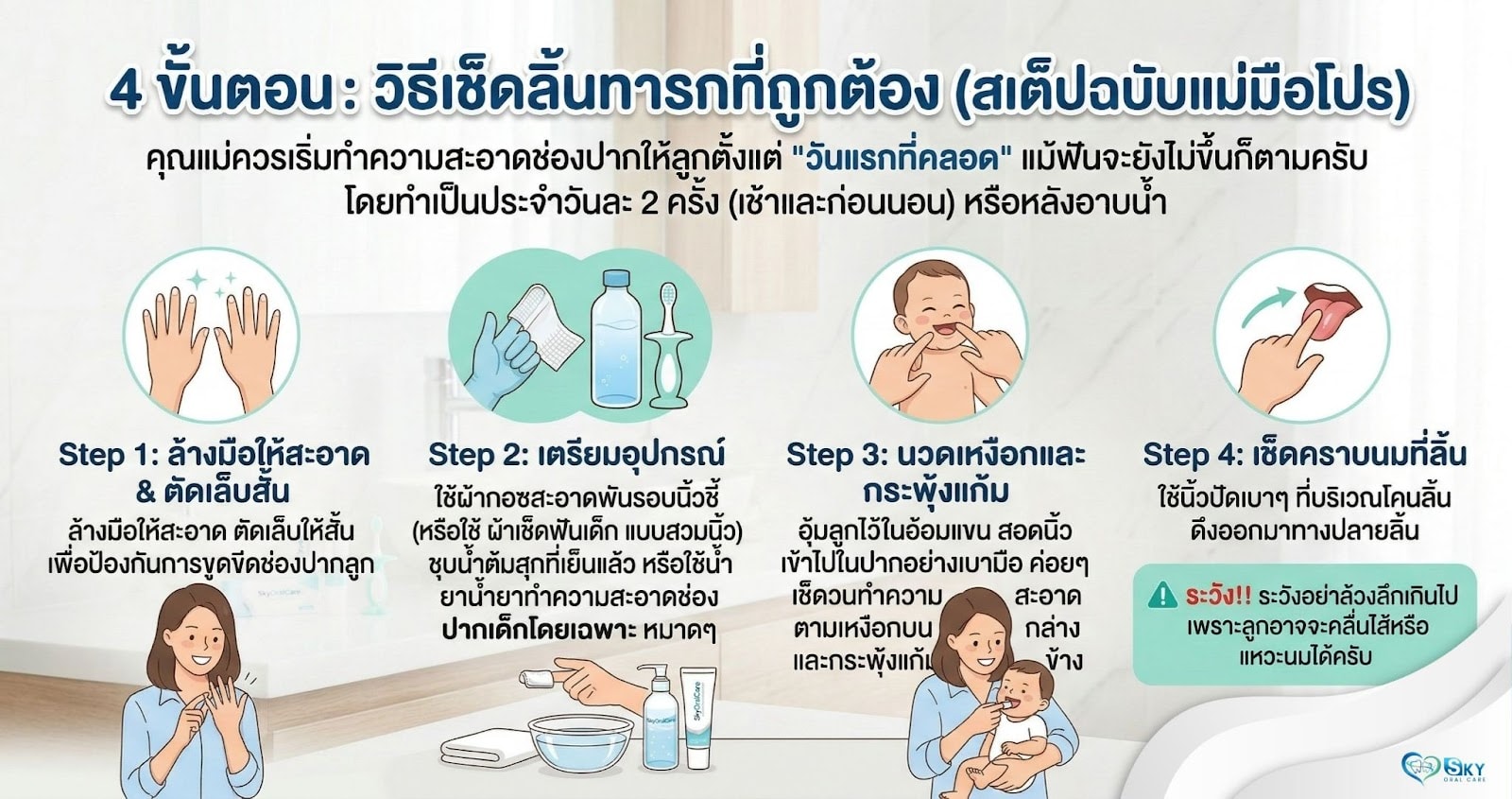
✨ 4 Steps to Clean a Baby’s Tongue (Pro-Mom Edition)
Moms should start cleaning their baby’s mouth from “the day they’re born,” even before any teeth come in. Do it regularly twice a day (morning and before bed) or after bath time.
Step 1: Wash your hands well and trim your nails short so you don’t scratch your baby’s mouth.
Step 2: Get your supplies ready Wrap clean gauze around your index finger (or use a finger-style baby tooth wipe) and dampen it with cooled boiled water or an oral cleanser made especially for babies.
Step 3: Massage the gums and cheeks Hold your baby in your arms, gently slip your finger into their mouth, and slowly wipe in circles along the upper gums, the lower gums and both inner cheeks.
Step 4: Wipe the milk residue off the tongue Gently sweep from the back of the tongue toward the tip (be careful not to reach too far back, as your baby may gag or spit up milk).
A Modern Mom’s Helper: Quick, Thorough and Gentle
Boiled water alone may not wipe away stubborn milk fat completely, and if you rub too hard, your baby will hurt and cry.
We recommend an item every modern mom should have at home: [Sky Kids Organic Oral Cleanser], an oral cleanser for wiping the mouths of babies and young children.
Food Grade: Made from organic extracts, designed for babies who can’t spit yet.
Breaks down milk residue easily: Helps reduce milk fat and the white coating on the tongue so they come off gently, without scrubbing.
Reduces bacteria and fungi: Helps balance the mouth and prevent fungus and a deep-set white coating on the tongue.
How to use: Just put a few drops of Sky Kids Oral Cleanser on gauze or a baby tooth wipe, then wipe your little one’s tongue, gums and inner cheeks right away, with no need to rinse.
❓ Q&A: 5 Common Questions About Cleaning a Baby’s Mouth
Q1: Can I use a muslin cloth or a damp towel to wipe my baby’s tongue instead?
A: We don’t recommend it, because towels and muslin cloths are usually rough. Rubbing them on the delicate tissue inside a baby’s mouth may cause scrapes. “Medical gauze” or “baby tooth wipes,” which are sterilized and extra soft, are safer.
Q2: How often should I wipe my baby’s tongue? After every feed?
A: Dentists recommend wiping at least twice a day (morning and before bed). There’s no need to wipe after every feed, as it may disturb your baby’s sleep, and wiping right after a full feed may make them spit up. Wait about 15-30 minutes for digestion before wiping.
Q3: My baby cries and clamps their mouth shut. What should I do?
A: It’s normal for babies to resist something unfamiliar. Try “singing or chatting” to distract them, and smile so they can see it’s playtime. You could also try an Oral Cleanser with a light fruity scent, which can help your baby cooperate and open their mouth more easily.
Q4: Is wiping with warm boiled water alone enough?
A: It’s fine in the newborn period. But plain water doesn’t break down stubborn fat from breast milk or formula very well. As your baby grows, milk residue builds up thicker, and a Food Grade oral wipe solution clears away fat and bacteria more cleanly and quickly.
Q5: My baby’s first tooth is in. Should I still wipe with a cloth?
A: When the “first baby tooth” breaks through the gum (at around 6 months old), you need to switch to a soft-bristled children’s toothbrush with a fluoride-free children’s toothpaste (for young children) to brush the tooth. You can still use a cloth with cleanser on the tongue and inner cheeks alongside brushing.
Summary
A “white coating on your baby’s tongue” isn’t something to ignore. Starting oral care from birth not only helps prevent thrush and cavities later on, it also gets your baby used to it, so they won’t fight brushing as they grow. Let Sky Oral Care help look after your little one’s first smile, for your peace of mind every day.
A must-have for moms! Clears milk residue easily and is safe for your little one